 Picking your fruit…Picking your fruit…
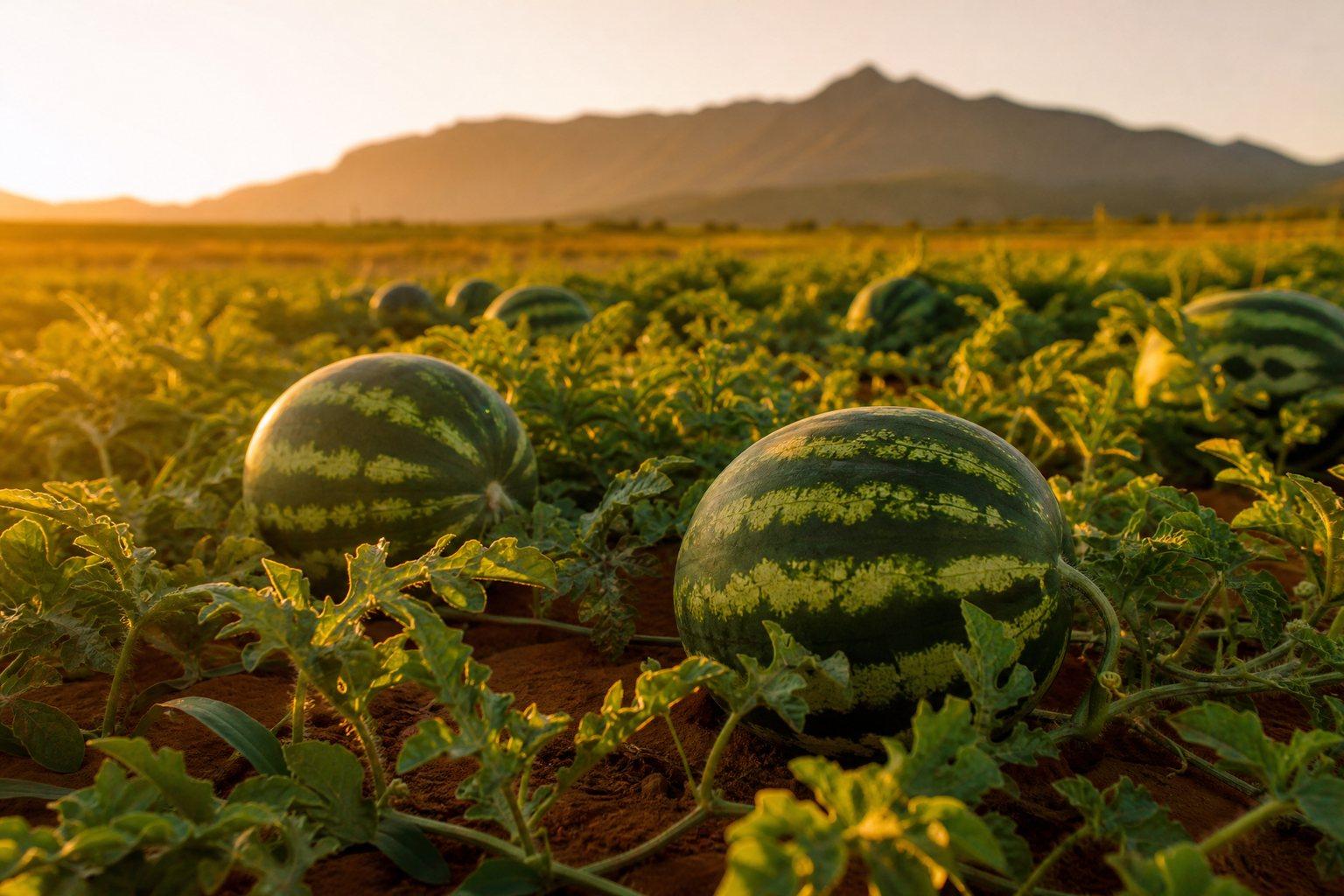
Crisp, cold and dripping with juice. Watermelon is summer in a single slice.
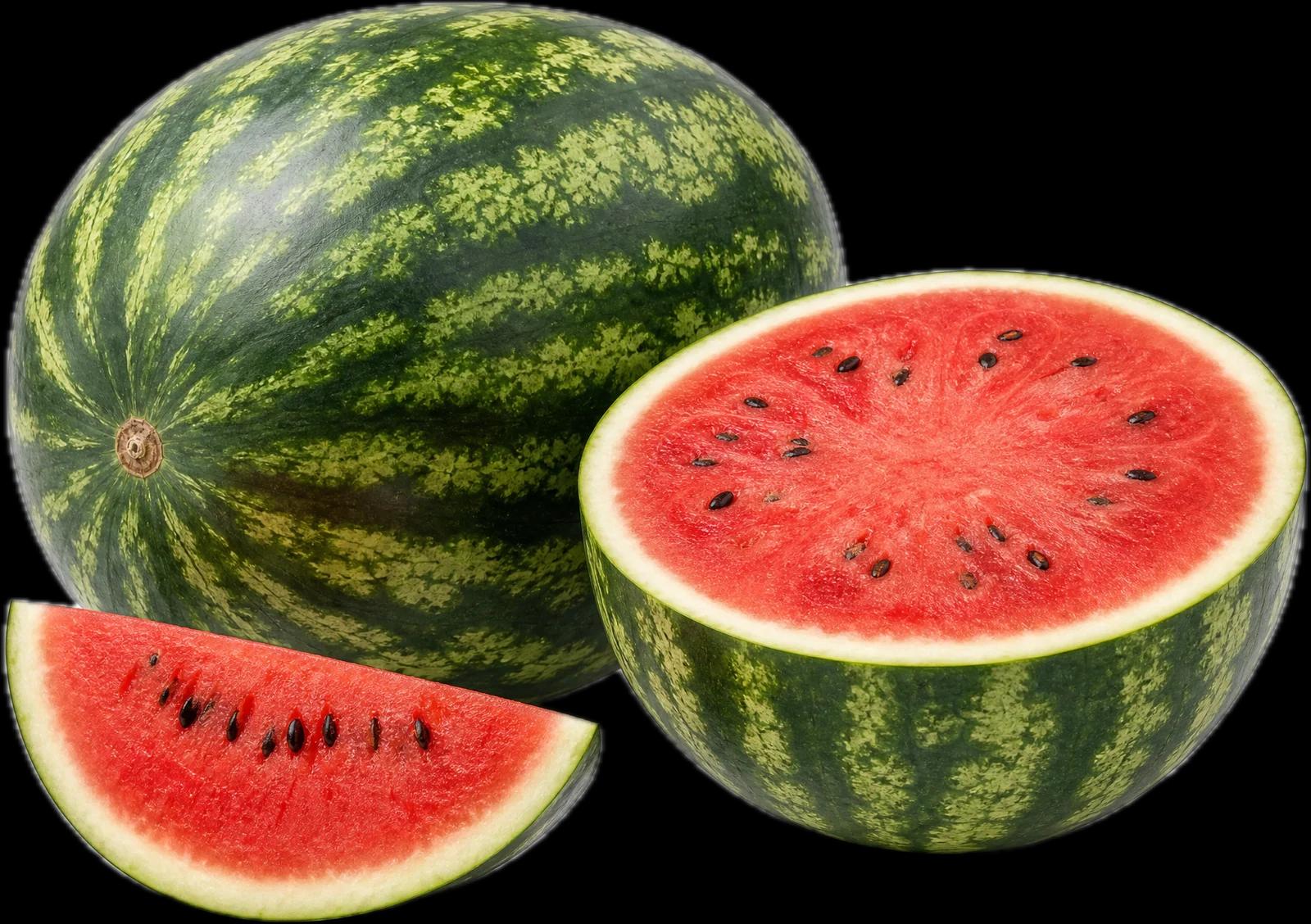
One variety, picked from week 49 (Dec) to week 10 (Mar).
Swipe the calendar sideways to see every week.
Watermelons grow on sprawling vines and love the heat. Long sunny days in the valley build the sugar in the deep red flesh.
We pick by eye and by ear: a creamy yellow patch where the melon rested on the ground, a dried tendril by the stem, and a deep, hollow sound when you knock on it.
Crisp, juicy red watermelon. The taste of a hot Eastern Cape summer.
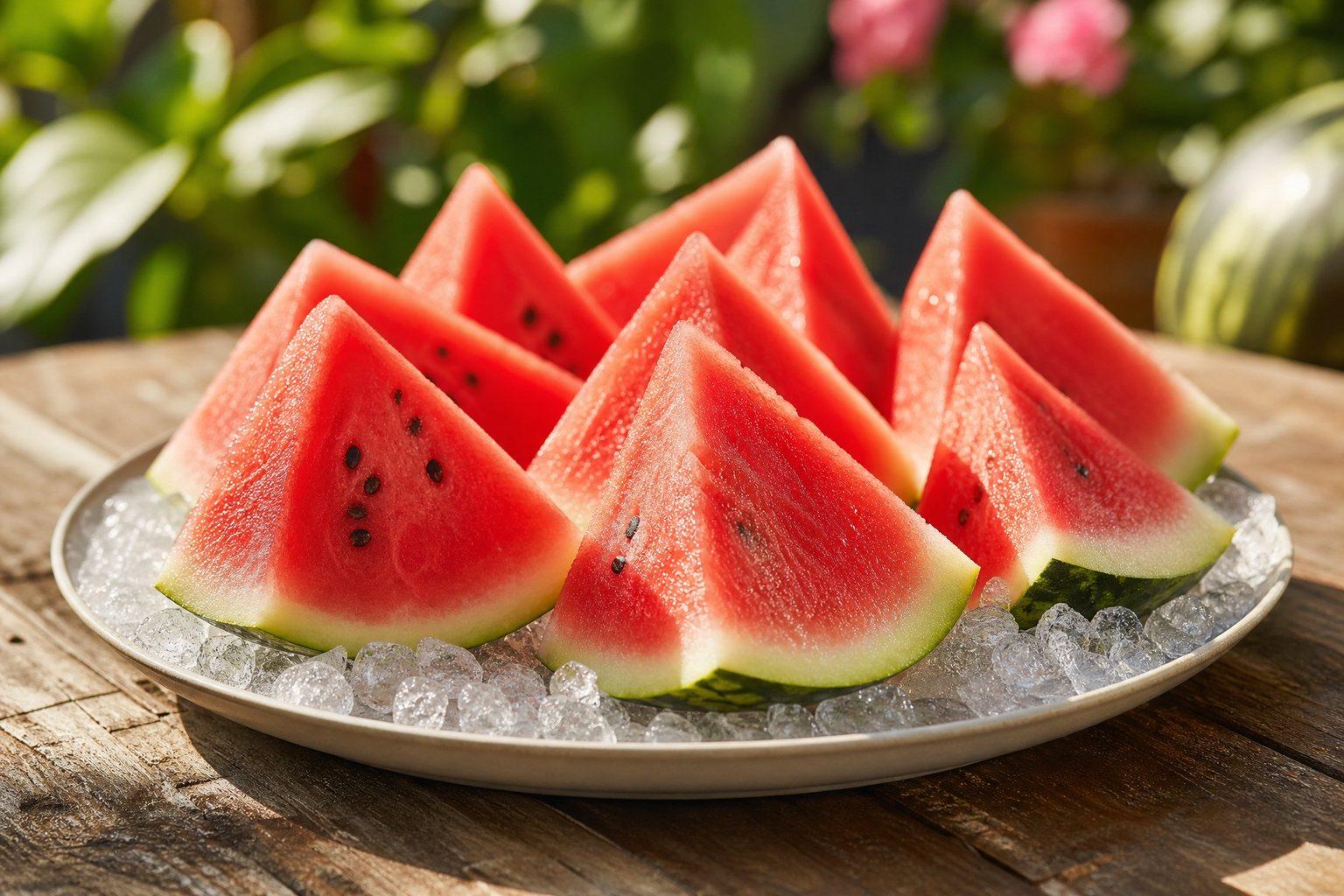
Chill it, cut it into wedges and eat it outside. The simplest way is still the best.
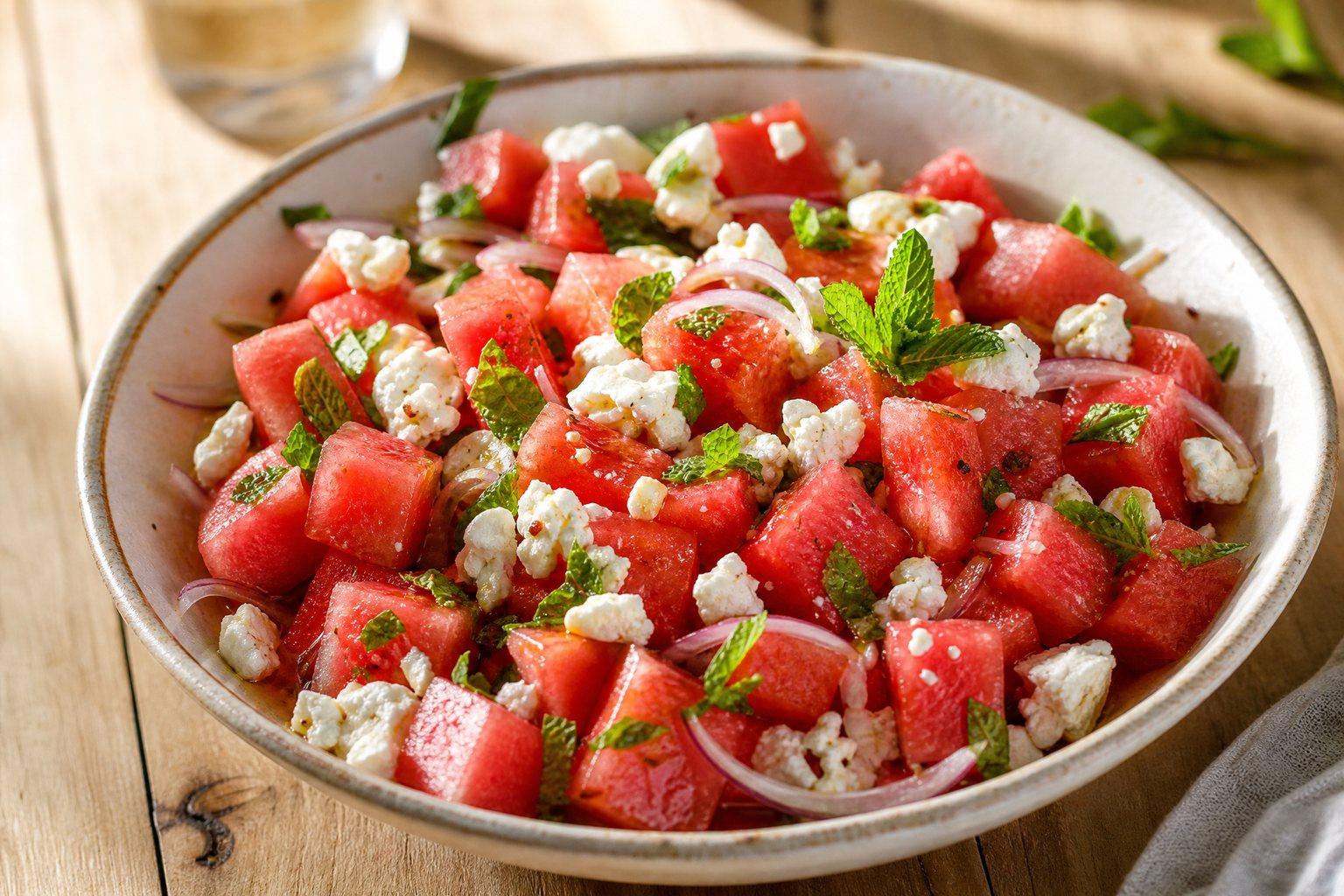
Cubes of watermelon with salty feta, mint and red onion make a fresh summer salad.
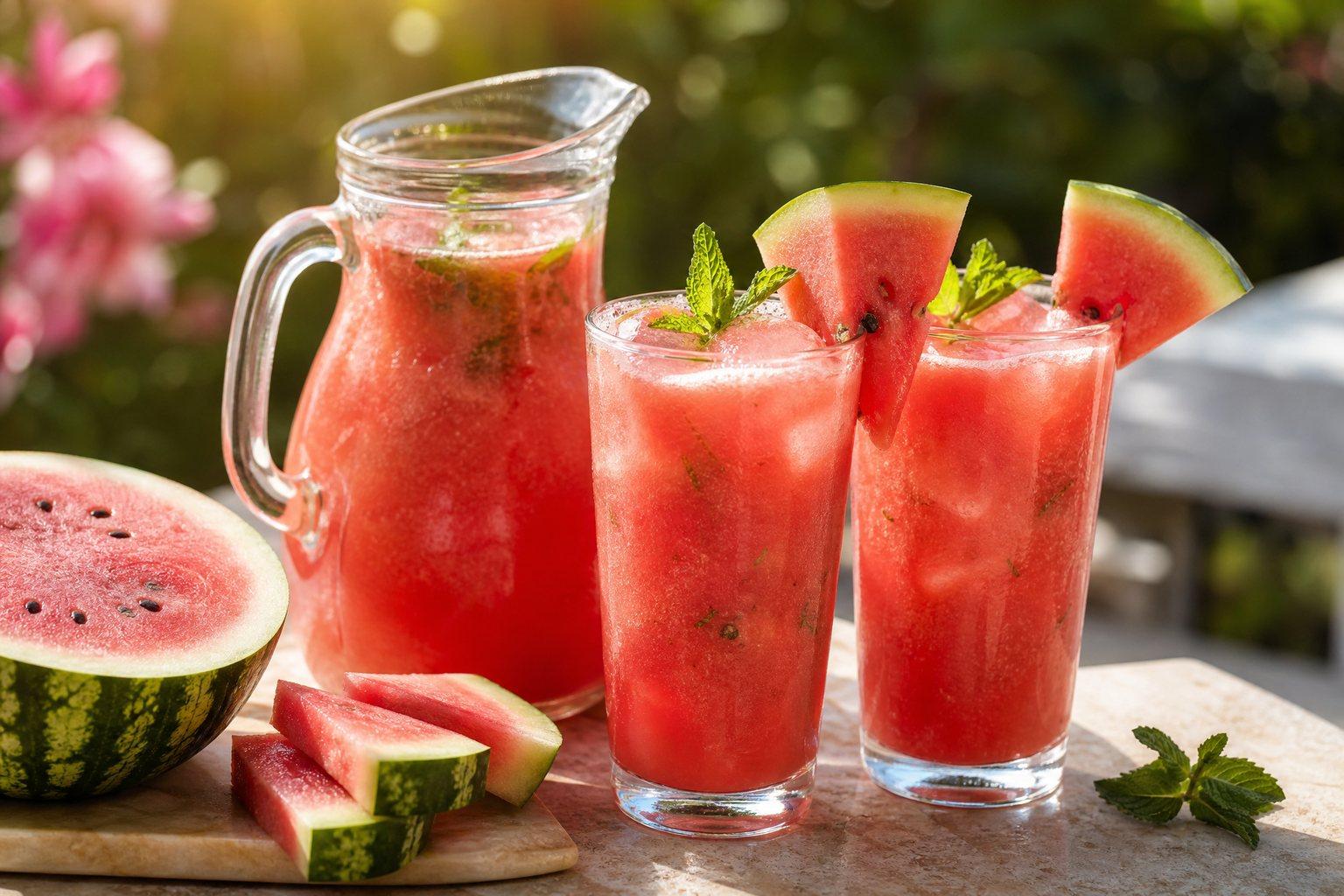
Blend the flesh with ice and a little lime for a cold, pink drink on a hot day.
Figures for a wedge of watermelon, about 286 g of fresh fruit. Low in fat and over 90% water.
Source: USDA FoodData Central. Daily needs are the US FDA’s Daily Values for adults; fresh fruit varies, so treat these as a guide.
Look for a heavy melon with a creamy yellow ground spot and a deep, hollow knock.
Whole, it keeps for a week or two somewhere cool. Chill it before serving.
Once cut, cover it and keep it in the fridge for three to four days.
Watermelon comes from Africa. Its closest wild relative is the Kordofan melon of Sudan, and wild melons like the tsamma of the Kalahari have long been a source of water in dry country.
Watermelons appear in Egyptian tomb paintings more than 4,000 years old, and their seeds were placed in tombs, including Tutankhamun’s.
Traders carried watermelon around the Mediterranean, into Asia and on to the Americas. It is now grown in warm places all over the world.
Oranges, grapefruit and lemons, all grown and packed on the estate.